

The Center for Instructional Excellence is run by an advisory board made up of faculty, student-facing staff, an office manager, and a part-time faculty director who reports to the Vice President for Educational Services. CIE helps to administer professional development funding and programming for full-time and adjunct faculty, administers faculty sabbaticals, and facilitates the Faculty Excellence Awards. CIE partners with Ed Tech in the Center for Teaching and Learning and also works with the NMC Library and the Professional Development Institute (staff PD). View the CIE Handbook to learn more.
Meet the Board

Janet Lively
Director
Communications Instructor

Ryan Bernstein
Board Member
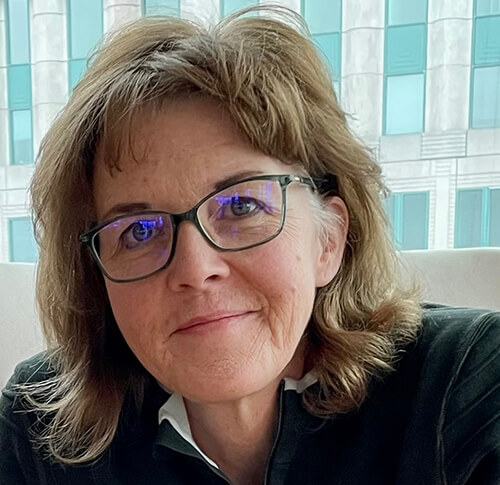
Lisa Blackford
Board Member
Social Science Instructor
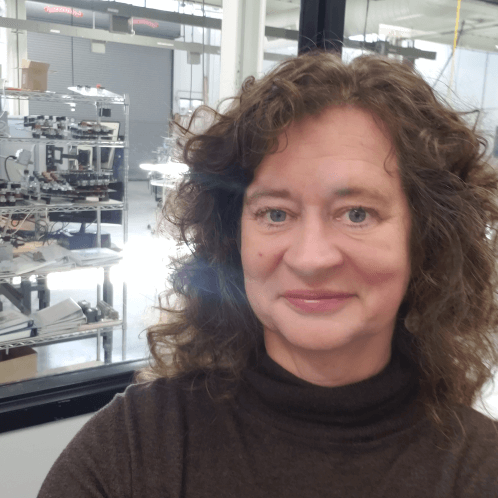
Hollianne McHugh
Board Member
Engineering Technology Instructor

Nick Roster
Board Member
Biology Instructor

Kristen Salathiel
Board Member
Communications Instructor

Nicole Speelman
Board Member
Chemistry Instructor

Tracy Welch
Board Member
Experiential Learning Institute, Office Manager
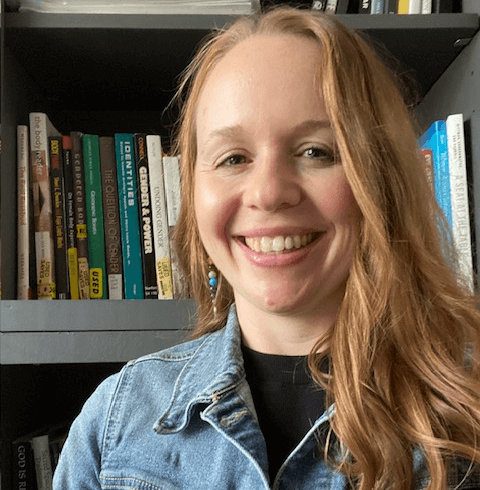
Rachel Wilczewski
Board Member
Sociology Instructor
CIE Activities
New Faculty Institute
New Faculty Institute includes orientation in August and monthly meetings for provisional faculty and new adjuncts. Provisional faculty are required to attend monthly meetings for their first two years and are welcome in their third year. New adjunct faculty receive a stipend for attendance during their first three years.
New Faculty Institute meets once a month. Programs include meetings with support staff and faculty from around the college. We focus on the logistics of teaching at NMC and best practices for college instruction.
Friday Forum
Faculty meet monthly for programming on topical issues at NMC and in higher education, usually on the first Friday. Faculty and staff present on a range of issues from study abroad to generative A.I. to teaching controversial topics. Provisional faculty are required to attend; adjunct faculty and staff are always welcome. CIE provides lunch.
Friday Forums meet from 12:30-2 p.m. 2026 meeting dates:
- September 11 – TJNIC106/107
- October 2 – TJNIC106/107
- November 6 – Osterlin 203
- December 4 – APL
Coffee Club
Held in the cozy Library Reading Room, these meetings provide a discussion format for timely topics facing faculty and staff at NMC. CIE provides coffee and donuts.
Coffee Club meet from 10 – 11 a.m.
- September 18
- November 20
- December TBD
Professional Development Days
The main professional development events of the year are three PD sessions required for all full-time faculty. Here are this year’s dates:
- AUG 17 – Hagerty Center | 12:00 – 3:30 PM
- OCT 13 – October Conference
- JAN – TBD
CIE Books
 Urbana, Ohio, was not a utopia when Beth Macy grew up there in the ’70s and ’80s—certainly not for her family. Her dad was known as the town drunk, which hurt, as did their poverty. But Urbana had a healthy economy and thriving schools, and Macy had middle-class schoolmates whose families became her role models. Though she left for college on a Pell Grant and then a faraway career in journalism, she still clung gratefully to the place that had helped raise her.
But as Macy’s mother’s health declined in 2020, she couldn’t shake the feeling that her town had dramatically hardened. Macy had grown up as the paper girl, delivering the local newspaper, which was the community’s civic glue. Now she found scant local news and precious little civic glue. Yes, much of the work that once supported the middle class had gone away, but that didn’t begin to cover the forces turning Urbana into a poorer and angrier place. Absenteeism soared in the schools and in the workplace as a mental health crisis gripped the small city. Some of her old friends now embraced conspiracies.
This was not an assignment Beth Macy had ever imagined taking on, but after her mother’s death, she decided to figure out what happened to Urbana in the forty years since she’d left. The result is an astonishing book that, by taking us into the heart of one place, brings into focus our most urgent set of national issues.
Paper Girl is a gift of courage, empathy, and insight. Beth Macy has turned to face the darkness in her family and community, people she loves wholeheartedly, even the ones she sometimes struggles to like. And in facing the truth—in person, with respect—she has found sparks of human dignity that she has used to light a signal fire of warning, but also of hope.
CIE Resource Library
CIE maintains a section of books and resources within the NMC Library for faculty use. Browse the titles online.