
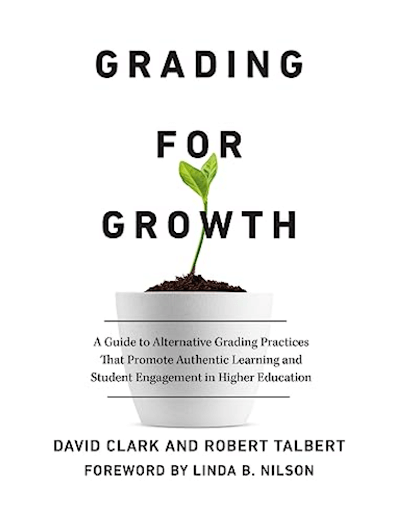
 What if there was a way to engage students AND make grading more worthwhile? Robert Talbert and David Clark propose a way to do just that in their how-to book on alternative grading. CIE is distributing the books in advance of Talbert’s presentation at our January Professional Development on Jan. 7.
Talbert and Clark, math professors at Grand Valley State University, have been practicing and preaching the gospel of alternative grading for years. Their book combines a dose of theory with extensive research and strategies for growth-based grading in all disciplines.
While Talbert and Clark are all in, they argue that even small changes in grading practices can improve student learning and improve class rapport. By focusing on standards and feedback rather than numerical grades, instructors simplify the assessment process. In fact, “keep it simple” is the mantra of the book.
Talbert was one of three presenters at our January Professional Development last year. We’re bringing him back for the full three hours this time. He will lead us through a hands-on workshop on aligning assignments, active learning strategies, and assessments to your learning goals.
We recommend that you read the first three chapters to prepare for the workshop. If that’s too much, read Chapter 3 (nine pages) to become familiar with the four pillars of alternative grading. Once you get started, however, you are likely to keep reading. The writing is engaging and accessible, written for busy instructors by busy instructors. It is loaded with examples and easy-to-implement changes for different course formats.
Books will be distributed at CIE events and are available from CIE office manager Tracy Welch in the Experiential Learning Institute office (Innovation Center).